Hidden Risks Parents Miss When Kids Have Food Allergies
Food allergy management feels straightforward at first — read labels, carry an epinephrine auto-injector, avoid the obvious triggers. But the gaps that send children to the emergency room are rarely the obvious ones. They live in the spaces between what parents know to watch for and what actually happens in the real world: the birthday party, the school cafeteria, the family barbecue, the restaurant table where cross-contact happens before anyone realizes it. Understanding where the real risks hide is what separates reactive management from genuine safety.
Cross-Contact Is Not the Same as Cross-Contamination
Most parents know to avoid foods that list an allergen on the label. Far fewer understand cross-contact — the process by which an allergen transfers to a supposedly safe food through shared surfaces, utensils, or handling. Unlike cross-contamination in the bacterial sense, even a microscopic amount of an allergen can trigger a serious reaction. There is no safe threshold that has been established for most food allergens.
The risk shows up in predictable but overlooked places. A shared cutting board that was “wiped clean” before preparing an allergen-free meal. A serving spoon used across multiple dishes at a buffet. A fryer that cooks both fish and french fries. The dose that matters is often smaller than visible to the naked eye.
Parents frequently face a choice between two approaches at home: strict dedicated equipment versus rigorous cleaning protocols. Dedicated equipment — separate cutting boards, colanders, and cookware reserved only for allergen-safe cooking — removes ambiguity entirely and costs between $20 and $60 to set up for most kitchens. Cleaning protocols that rely on soap and hot water can be equally effective for hard, non-porous surfaces, but are far riskier with wooden utensils, scratched plastics, and porous materials that trap protein residue. If there is any doubt about whether a surface can be fully cleaned, the safer and lower-cost decision is replacement rather than continued use.
- Replace any wooden cutting boards, spoons, or scratched plastic containers that have previously come into contact with the identified allergen, since porous surfaces cannot be reliably decontaminated.
- Label dedicated allergen-safe cookware with colored tape or a permanent marker to prevent accidental reuse by other household members or guests.
- Wash hands with soap and water — not just hand sanitizer — for at least 20 seconds before preparing allergen-safe meals, since sanitizer does not break down food proteins.
The Label Loopholes That Catch Parents Off Guard
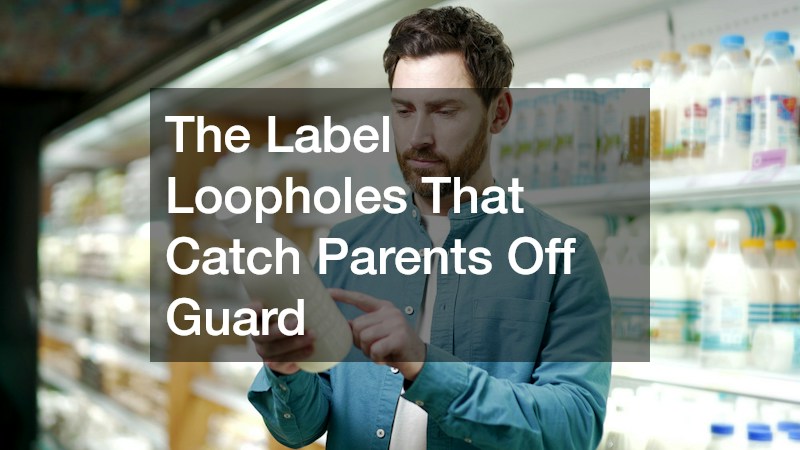
The Food Allergen Labeling and Consumer Protection Act requires that the nine major allergens — including peanuts, tree nuts, milk, eggs, wheat, soy, fish, shellfish, and sesame — be declared on packaged food labels in plain language. What it does not require is disclosure of shared manufacturing equipment or shared production lines unless the manufacturer chooses to include that warning voluntarily.
This matters because “may contain” and “processed in a facility with” statements are entirely optional and inconsistently applied across the food industry. One manufacturer may include these warnings as a precaution; another may produce in the same type of facility and omit the statement entirely. Parents who use the absence of a precautionary warning as a safety signal are working from incomplete information.
Equally dangerous is the assumption that a familiar product is always safe. Formulas change. Manufacturers switch suppliers or processing facilities without any notification on the front of the package. A product that was safe for a child last month may have a modified ingredient or a new shared-equipment arrangement this month. The only reliable habit is reading the full ingredient list every single time — not just on first purchase.
- Check the full ingredient list and any allergen statements each time a product is purchased, not just once at initial introduction to the child’s diet.
- Contact manufacturers directly by phone when precautionary labeling is absent but the product category is high-risk — many will disclose shared equipment information that does not appear on the label.
- Cross-reference products against databases maintained by allergy advocacy organizations, which track ingredient and facility changes reported by families.
Where Risk Spikes Outside the Home
Managing a food allergy inside one household is a controlled environment. The moment a child moves into the social world — school, sports, birthday parties, travel — the variables multiply in ways that even organized parents underestimate.
Restaurants are one of the highest-risk environments, and the gap between what staff say and what actually happens in a kitchen is well documented. Asking a server whether a dish contains an allergen is not the same as communicating with the person preparing the food. When families are choosing where to eat, prioritizing the best restaurants with dedicated allergen protocols — not just allergy-friendly menu items — significantly reduces the likelihood of a cross-contact incident.
Schools present a different challenge. A 504 plan or individualized health plan creates legal documentation, but the practical reality depends on whether every adult in the building understands and follows the protocol. Studies by the Centers for Disease Control and Prevention have found that most anaphylaxis reactions in schools happen in children with previously diagnosed allergies, often because emergency medication was not immediately accessible. That is a procedural failure, not a knowledge failure.
The birthday party scenario is worth examining specifically. Parents of the allergic child often feel reluctant to impose restrictions on another family’s event. That hesitation costs children their safety. Calling the hosting parent 48 hours ahead to discuss ingredients, sending a clearly labeled safe snack with the child, and ensuring the epinephrine auto-injector is with a supervising adult — not in a bag across the room — are non-negotiable steps, not optional courtesies.
- Send a written allergen alert card with the child to any event, listing the specific allergen, the symptoms of a reaction, and the steps to take if exposure occurs, including the location of the epinephrine auto-injector.
- Request a pre-event call with school cafeteria staff at the start of each school year to review protocols, not just submit paperwork.
- Practice epinephrine auto-injector use with every adult who regularly supervises the child — a study published in the Annals of Allergy, Asthma and Immunology found that significant portions of caregivers could not correctly demonstrate administration when tested.
The Emotional Variable Parents Often Underestimate

As children age, they develop a second layer of risk that has nothing to do with ingredient lists: the psychological pressure to fit in. Adolescents with food allergies are statistically more likely to take risks with food than younger children, and they are also more likely to minimize symptoms or delay reporting a reaction to avoid drawing attention to themselves.
This creates a genuine management fork. Parents can respond by tightening control — more oversight, more restrictions, stricter rules — or by shifting toward building the child’s own competence. The research is fairly consistent that autonomy-building, done gradually and with real practice, produces better long-term outcomes than surveillance-based control, because children eventually operate in environments where parents are not present.
Practical competence means more than knowing the allergen exists. It means a teenager can read a menu and ask the right questions, recognize the early symptoms of a reaction in their own body, know exactly where their auto-injector is, and administer it or direct someone else to do so without hesitation. Children who have rehearsed these steps — not just been told about them — are measurably more likely to respond correctly under stress.
- Role-play restaurant and social situations with children at least twice a year, practicing how to ask about ingredients and what to say if they feel a reaction starting.
- Involve children aged 8 and older in the process of reading labels during grocery shopping, building the habit before independence becomes necessary.
- Schedule an annual review with the child’s allergist to reassess the emergency action plan as the child’s independence level changes.
Building the System Before You Need It
The families who manage food allergies most effectively are not the ones who are most vigilant in the moment — they are the ones who built reliable systems before an emergency arose. That distinction matters because anxiety-driven vigilance is inconsistent and exhausting. Systems are stable.
Start with documentation. An updated written emergency action plan, signed by the allergist, should live at school, with any regular caregiver, in a shared digital location accessible to both parents, and with the child if old enough. Epinephrine auto-injectors expire — typically within 12 to 18 months — and having an expired device at the moment it is needed is an entirely preventable failure. Set a calendar reminder three months before the expiration date. Revisit the entire plan each time the child moves to a new school, a new grade with a new set of adults, or a new activity. The risk does not disappear when routines change — it spikes. Building the review habit into those transitions is what keeps the system current instead of dangerously outdated.

Post Comment